
Asian Valjoux vs. Clone Movements (3235/3285)
Swiss ETA vs. Clone Movements (3135/3285): A Complete Technical Guide
When you graduate from entry-level fashion watches and enter the higher echelons of the super clone market, you arrive at a fascinating technical crossroads. You are no longer simply trying to avoid a cheap knockoff; you are making a deliberate choice between two very different philosophies of high-end mechanical engineering. If you are shopping for a premium piece—especially iconic models like the Submariner or GMT-Master II—you will inevitably face a choice: do you go with a trusty Swiss ETA architecture, or do you upgrade to a custom 1:1 Super clone movement like the 3135 or 3285?
To the untrained eye, both sweep smoothly and keep great time. But under the hood, they are vastly different beasts. Let’s break down the mechanics to help you decide which engine belongs on your wrist.
The Traditional Powerhouse: Swiss ETA Architecture
When we talk about ETA movements (like the 2824 or 2836) in the luxury replica market, we are referring to the highly reliable, mass-produced designs that have served as the backbone of the global watch industry for decades.
- The Pros: The greatest advantage of the ETA platform is absolute, bulletproof reliability. Beating at a buttery smooth 28,800 vibrations per hour (vph), these movements are robust. Furthermore, because their architecture is universal, servicing them is incredibly easy. If a gear slips five years from now, literally any competent local watchmaker in India can open it up, source generic parts, and have it running perfectly in no time.
- The Cons: It is a generic layout. If you were to open the closed steel case back of a Rolex replica running an ETA movement, the internals would not look like a genuine Rolex caliber. Additionally, the tactile feel of setting the time—such as the direction you turn the crown to advance the hands—might differ from the authentic model.
The Modern Marvel: 1:1 Clone Movements (3135, 3235, 3285)
Over the last few years, elite manufacturers like VSF and Clean Factory decided that "close enough" simply wasn't good enough anymore. Instead of forcing a generic ETA movement into a Rolex case, they spent millions reverse-engineering genuine Rolex calibers piece by piece.
- The Pros: Forensics-level authenticity. These custom clone movements—like the 3135 (older Submariners), 3235 (new Submariners and Datejusts), and 3285 (the GMT-Master II)—look and act identically to the real deal. They feature the correct dimensions, the signature blue Parachrom hairspring aesthetic, and the exact same winding feel. If you turn the crown on a 3235 clone, the hands move in the exact same direction as a genuine Rolex. Crucially, the newest 3285 clones even offer the true independent jumping hour hand for setting a second time zone, alongside a massive 70+ hour power reserve.
- The Cons: Because they are highly complex, bespoke pieces of micro-engineering, they drive up the overall cost of the watch. Furthermore, because the parts are proprietary to the replica factory, they can be slightly harder to source if you require a major overhaul, often requiring a specialized replica watchsmith.
The "Tell": For years, the easiest way to spot a fake Rolex was to unscrew the crown and see which way the hands moved when turning it. The advent of true 3135 and 3235 clone movements completely eliminated this tell.
Making the Final Decision
So, which should you buy? If you are a pragmatic buyer who wants a watch that looks flawless on the wrist but is incredibly easy and cheap to maintain over a lifetime, the classic ETA route is your best friend. It is the definition of a worry-free daily driver.
Ultimately, the debate between clone movements vs traditional ETA engineering comes down to your personal priorities: everyday practicality versus microscopic authenticity. Whichever path you choose, understanding the mechanics ensures you are making a confident, educated investment in your personal style.
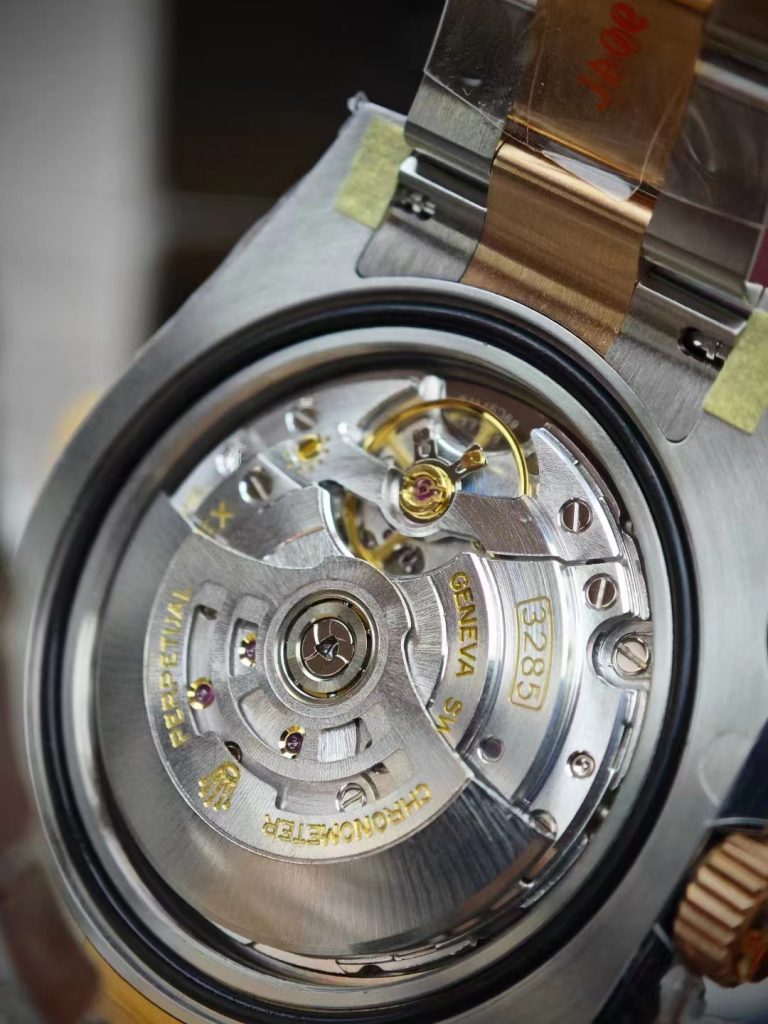
However, if you are a true horology purist who demands absolute mechanical perfection—where the watch winds, sets, and ticks identically to the genuine article, and you want that extended weekend power reserve—the custom clone is an absolute masterpiece of modern manufacturing.